Struggling to choose between perlite and pumice for your plant’s drainage needs? Both are popular options, but they serve slightly different purposes.
Perlite offers quick drainage with lightweight particles.
Pumice drains well but also retains moisture longer.
Keep reading to discover which fits your garden best.
Perlite vs Pumice Drainage Speed
Perlite generally provides faster drainage than pumice because its expanded, lightweight particles create larger air pockets that allow excess water to flow through almost immediately. The particle size plays a key role; larger grades of perlite drain more quickly than smaller, finer particles. Fine or dusty perlite tends to pack tighter, slowing water movement. As a result, blends with a high percentage of perlite tend to dry out faster after watering. However, because of its low density, perlite can float to the surface with each watering, disrupting its drainage uniformity. This migration can cause the rapid drainage to become inconsistent over time, as larger air pockets move away from the root zone. This inconsistency resembles the need for proper calibration to ensure readings remain accurate. Additionally, perlite’s lightweight structure is ideal for soilless mixes where weight reduction is a priority. Its porous nature also helps prevent soil compaction by maintaining aeration in the root zone.

[Enhanced Soil Aeration] - Perlite improves soil aeration, allowing roots to access oxygen more efficiently, which is crucial for healthy plant growth.

8qt bag of Premium Horticultural Grade Perlite to promote root growth, soil aeration & drainage

INDOOR GROWING: Growing indoors is easy under the right conditions; Miracle-Gro Houseplant Potting Mix is an indoor plant potting soil that combines key elements container plants need to thrive
Perlite vs Pumice Water Retention
Pumice retains more water than perlite, making it a better choice for maintaining moisture. Pumice can hold about 15–25% of its volume as water, while perlite typically stores around 10–20%. This is due to pumice’s internal pore structure, which acts as a moisture reservoir, releasing water gradually to plant roots as the soil dries. In contrast, perlite mainly traps water on its rough exterior surface and dries out faster. Even so, macro nutrient levels are not directly affected by either material, as both are inert and provide no nutritional boost to plants. Particle size also influences water retention: finer grades of both materials increase moisture-holding capacity. Because pumice stores water internally, it reduces the frequency of watering, offering steadier moisture levels. Perlite dries quickly and is better suited for situations where minimal water retention is preferred. Similarly, watering a coco coir pole is essential for providing moisture to plants that climb it, as the material absorbs and holds water like pumice to support root growth. Perlite’s neutral pH means it does not alter soil acidity, whereas pumice also remains chemically inert, so the choice between them focuses on drainage and moisture dynamics rather than pH adjustments.

【SIZE AND WEIGHT】: Weight: About 2.2 LBS. SIZE: Approx 0.4"( 1 CM ).

14 dry quarts (3.5 gallons / 56 cups) of natural mined Pumice

Superior drainage & root health – Maintains optimal moisture control for succulents, cacti, and bonsai; promotes airflow to roots to help prevent rot and overwatering
Which Lasts Longer in Your Potting Mix?
Pumice lasts significantly longer in your potting mix than perlite. While perlite tends to break down into fine particles after a few years of root pressure and watering, pumice remains structurally intact for decades. According to typical grower experience, perlite lasts only a few years before it begins to crumble. This durability means you won’t need to replace pumice annually; instead, you can rinse it and reuse it repeatedly after repotting, extending its effective lifespan indefinitely. In comparison, perlite’s crushed particles gradually fill air spaces, reducing soil aeration and drainage over time. Pumice resists crushing due to its rigid, porous structure, maintaining consistent pore spaces that support good gas exchange and nutrient retention. Its stability ensures drainage channels stay open season after season, providing steady performance without degrading. Unlike some organic amendments that decompose, pumice provides inorganic structural integrity that never requires replacement. For containers intended to remain untouched for multiple years, pumice is the stronger, more sustainable choice. While perlite is suitable for short-term setups or frequent repotting, pumice offers long-lasting structural support that withstands the test of time. For similar reasons, many growers choose dehumidifiers for their grow room to maintain consistent airflow and prevent moisture buildup that can compact soil particles.

3QT bag of natural mined Pumice 1/4" particle size.Perfect for Bonsai, Succulent, Orchids, Seedlings, Cuttings - Pumice has a porous structure that provides excellent drainage and aeration which promotes root growth.
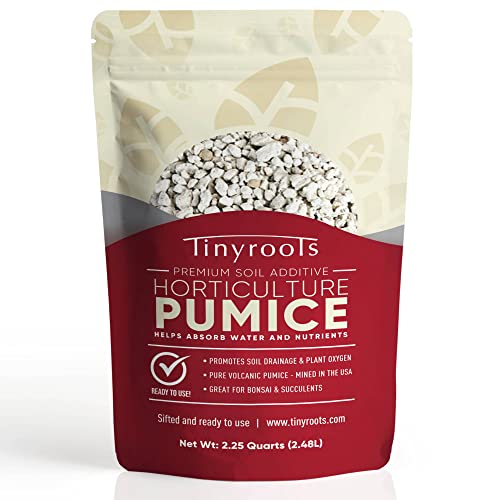
🎍 EXCELLENT DRAINAGE & EASY MAINTENANCE - Maintain the moisture for your succulents, cactus bonsai trees. Keep moisture while allowing air into the roots

【LIGHTWEIGHT & SIZE】You receive a generous 3QT bag of natural mined pumice with a 1/4" particle size. Perfect for mixing into potting soil, propagating cuttings, hydroponic systems, and even aquarium filtration. Suitable for indoor and outdoor plants like succulents, orchids, and vegetables.
Weight and Stability: Impact on Your Potting Mix
Pumice’s higher density provides significant weight and stability advantages in your potting mix. Its added ballast increases the container’s overall weight, helping your pots resist tipping caused by wind or top-heavy plants. Unlike perlite, which is very light and can lead to shifting in the pot, pumice stays firmly in place. After watering, perlite tends to float to the surface, reducing contact with roots and diminishing its drainage benefits. Pumice, on the other hand, resists hydraulic lift, maintaining a stable structure over time. Its durability prevents crumbling and the formation of fines that can clog pore spaces, and just as coco coir resists compaction by maintaining porous structure in mushroom substrates, pumice similarly preserves air pockets in potting mixes. Similar to how hydroponic towers use a lightweight medium to support root systems without soil, pumice provides a dense, stable base that prevents shifting in traditional pots. For a long-lasting, stable mix, pumice offers the weight and resilience necessary to keep your plants well-drained and supported. For gardeners focused on pruning shears for hydrangeas, a stable potting mix keeps the plant upright and easier to trim.

Colorful & Natural: Mix Horticultural Lava Rocks blend six natural stones for colorful gardening. Sized at 3/8" (6-9mm), they darken when used in water. Eco-friendly, non-staining and non-fading, maintaining enduring beauty at home.
Colorful & Natural: Mix Horticultural Lava Rocks blend six natural stones for colorful gardening. Sized at 3/8" (6-9mm), they darken when used in water. Eco-friendly, non-staining and non-fading, maintaining enduring beauty at home.

【Well Drainage】This succulent gritty mix is super well in water drainage, best for drought tolerant succulents and cactus, help your plants grow beautiful colors and also effective prevent rover water
Perlite or Pumice: When to Choose Which
Perlite is ideal for short-term projects like propagation or seed starting because it’s inexpensive, easily accessible, and provides immediate drainage with a light soil texture. It’s best used when you plan to repot annually or in large DIY batches where keeping costs low matters. Since perlite breaks down quickly over time, it suits applications where a quick turnover is needed. Always mix it thoroughly through the entire substrate, rather than layering it at the bottom, to ensure even drainage. For added safety in propagation, sterilizing perlite before use can prevent fungal or bacterial issues. For hydroponic systems requiring consistent water flow, consider a submersible water pump to circulate nutrient solutions effectively.
On the other hand, pumice is better suited for long-term use because it resists breakdown despite repeated watering. Its porous structure allows it to balance drainage with moisture retention, making it perfect for succulents, cacti, or aroids kept in the same pot for years. Pumice also doesn’t compact when exposed to outdoor rain, maintaining its structure over time. If you’re looking for a durable, stable medium that supports plants over the long haul, pumice is the better choice. For precision tasks like bonsai care, top pruning shears help maintain clean cuts that prevent damage to delicate roots and branches.

Package Includes: You will get 4 quarts of coarse perlite, these are evenly sized and perfect for adding to potting soil for potted plants or as pavement for succulents to keep your plants looking nice and clean, it is essential for precise cactus mixes or carnivorous plant soils as it pulls water away efficiently

【Optimal Aeration and Drainage】The unique properties of perlite and vermicutite ensure that roots receive ample oxygen while excess water drains away, preventing root rot and promoting healthy root development
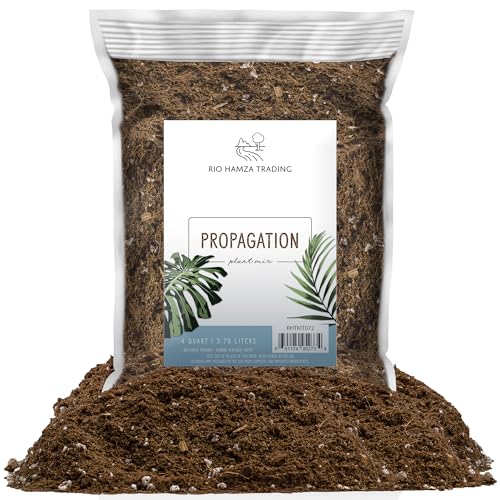
Lightweight Composition: The blend's lightweight nature ensures ease of use and handling during the delicate stages of plant propagation.