Have you ever wondered how to tell if the air around you is just the right level of moisture? A hygrometer is the tool that can give you a clear answer. It measures the humidity in the air, helping you keep your environment comfortable and healthy.
Whether you prefer mechanical or digital models, understanding how a hygrometer works can make all the difference. Keep reading to learn how to choose, use, and calibrate one properly.
What a Hygrometer Does and Why You Need One
A hygrometer measures relative humidity (RH), giving you an accurate percentage of water vapor in the air. This measurement can range from 0% (completely dry) to 100% (fully saturated). Knowing the exact humidity level helps you maintain a comfortable environment, prevent mold growth, and protect wooden furniture or artwork from moisture damage. Modern hygrometers use electronic sensors that provide quick, precise readings, making it easy to monitor air quality at a glance. Growers can rely on these sensors to trigger ventilation or irrigation based on the exact RH percentage and adjust conditions in real time. For accurate results, the sensor should be periodically cleaned and calibrated, just like a TDS EC meter requires maintenance to ensure reliable readings. Similarly, growers who use properly buffered coco coir help maintain stable moisture levels for their plants.
Historically, hygrometers started with simple devices relying on condensation or hair expansion techniques. Today’s models incorporate advanced sensors that are more reliable and suitable for critical industrial uses, such as pharmaceutical storage or climate-sensitive labs. With a hygrometer in your space, you don’t have to guess whether the air is too dry or too damp—just check the reading and adjust with a humidifier or dehumidifier as needed. This proactive approach helps keep your environment safe, comfortable, and free of moisture-related problems before they take hold.

Face Icon Comfort Indicator: Humidity temperature gauge features face icons to indicate DRY/COMFORT/WET air conditions, quickly informs you how to adjust your humidifier or dehumidifier to achieve optimal comfort.
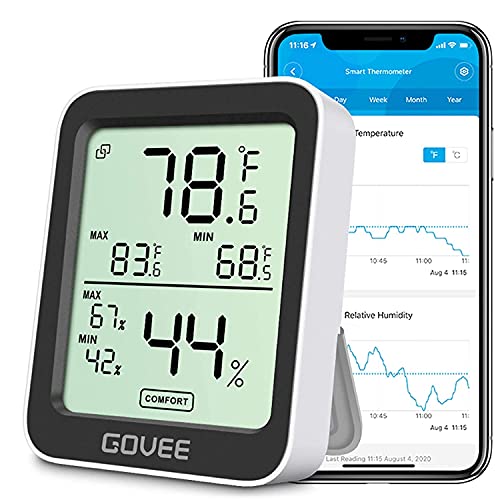
Smart Features: The Govee Wireless Thermometer Hygrometer supports all basic functions as well as smart functions such as remote monitoring and temp humidity graphs. Our humidity meters are reliable and easy to use for homes, greenhouses and more.(Only supports 164ft Bluetooth connection)

Real-Time Precision Monitoring with High Accuracy Sensors: Built with high-precision sensors, this indoor thermometer hygrometer delivers real-time temperature and humidity monitoring with reliable accuracy. It features a wide measuring range from -58°F to 158°F (±1.8°F accuracy) and 10%–99% RH humidity range (±5% RH accuracy). Providing stable data for daily home monitoring.
How a Hair Strand Becomes a Hygrometer
A single hair strand can serve as a humidity sensor because of its natural hygroscopic property. When humidity increases, the hair absorbs water molecules from the air and lengthens slightly. Conversely, as the air dries out and humidity drops, the hair contracts back to its original length. This process is similar to how sterilizing perlite requires careful preparation to ensure effectiveness. For grow tent environments, a dehumidifier for grow tent can help maintain optimal humidity levels alongside such a sensor. Proper maintenance of these instruments also involves cleaning garden shears to remove sap and debris that could affect their performance.
To turn this property into a functional hygrometer, one end of the hair is fixed inside the instrument, kept under tension to ensure consistent sensitivity. The other end connects to a mechanical linkage that amplifies the hair’s tiny movements. As the hair lengthens or shortens with changing humidity, the linkage moves a pointer across a scale marked for relative humidity levels. This mechanical motion provides a direct, visual indication of moisture content in the air, all without the need for electronic components.
Wet-Bulb vs. Dry-Bulb Hygrometers: The Classic Method
A psychrometer with a dry bulb and a wet bulb thermometer can accurately measure humidity without electronics. The wet bulb has a moistened wick, and as water evaporates from it, it causes evaporative cooling, making its temperature drop below that of the dry bulb thermometer. The difference between the two readings, known as the wet-bulb depression, indicates the humidity level: a larger depression means drier air, while a smaller one suggests higher humidity. To determine the relative humidity, you can refer to psychrometric charts or conversion tables that match the temperature difference to humidity percentages. This method is low-cost and reliable, but for best results, you need to ensure good airflow around the thermometers and keep the wick clean and moist. Similarly, pH test strips rely on a chemical reaction that changes color based on the concentration of hydrogen ions in a solution. For a different application, lava rock is often used as a porous growing medium that retains moisture and provides aeration for plant roots. In greenhouse environments, maintaining proper airflow is also critical, as exhaust fans help regulate temperature and moisture levels to prevent fungal growth.

Complete Classroom Kit: The Eisco Sling Psychrometer Classroom Kit provides a comprehensive 15-pack sling psychrometer kit, ensuring each student has their own equipment. This makes it ideal for science classrooms needing class-size coverage

Four essential psychrometric measurements: Displays wet bulb, dry bulb, dew point and relative humidity to give HVACR technicians the readings needed for everyday system diagnostics
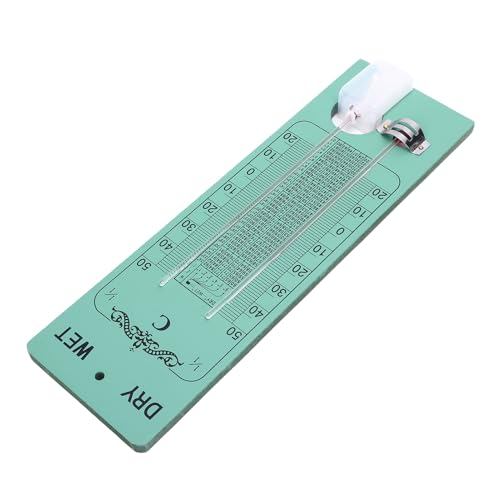
【High Precision Reading】Sling psychrometer with wet dry bulb thermometer design helps measure temperature and humidity clearly for onboard checks. Suitable for yacht cargo ship and vessel use.
How Digital Hygrometers Sense Humidity
Digital hygrometers sense humidity primarily through capacitive or resistive sensors. These sensors typically achieve around ±2–3% RH accuracy within a 10–90% relative humidity range. Their response times are usually just a few seconds, allowing for quick readings. Temperature compensation is integrated because humidity sensors have a temperature coefficient, which means their accuracy can be affected by temperature changes. Over time, sensor drift might occur, but more advanced units often allow recalibration to maintain precision. For hydroponic growers, coco coir is a popular medium that benefits from accurate humidity monitoring to prevent mold or drying. Using a best PAR meter can also help optimize light levels for plant growth alongside humidity control. The TempPro TP50 displays wellness indicator icons such as DRY, COMFORT, and WET for quick environment assessment. Using a best pH meter ensures the nutrient solution’s acidity is also properly balanced alongside humidity.

2-in-1 Thermometer & Hygrometer Meter: Equipped with a high-precision sensor, this temperature and humidity meter provides accurate readings, making it ideal for monitoring indoor environments like homes, offices, or greenhouses

【🧪Auto/Manual Detection】Insert this meter into soil and it will automatically detect the soil moisture level every 3 minute. The reading is showed on the LCD display 24/7, so that you can check it at a glance at anytime. For manual detection, just simply short press the button and you will get the reading within seconds. For remote monitoring via our RAINPOINT Home app, you must connect a compatible WiFi hub (2.4 GHz only, model: HWG023/HWG023WBRF/HWG040), sold separately.

2-in-1 Thermometer Hygrometer Meter: Built-in probe for unparalleled precision. It serves as both a digital electronic thermometer and a hygrometer, meticulously engineered for indoor environmental monitoring.
Dew Point and Other Specialized Sensors
Dew point sensors are essential for accurately measuring moisture in compressed-air and process-gas systems because they directly indicate the temperature at which condensation begins. Chilled mirror hygrometers are a common type, cooling a reflective surface until water vapor condenses, providing a precise dew point reading. Aluminum-oxide sensors are widely used in industrial humidity measurements; they detect trace moisture levels down to approximately -120°C dew point in dry gas streams. For more cost-effective and compact solutions, polymer and capacitive sensors monitor moisture continuously by converting water absorption into electrical signals. Resistive sensors cover intermediate dew point ranges, offering versatility depending on the application.
Specialty transmitters further expand options by providing readings like pressure dew point and absolute humidity, allowing you to match sensor outputs with your process needs. Positioning these sensors within ducts or enclosures helps identify condensation risks early, protecting your equipment from damage. Each sensor type has its ideal use case based on the desired gas purity level, so selecting the right sensor involves understanding your specific process requirements and moisture specifications.
Hygrometer Accuracy: Placement, Calibration, and Pitfalls
Proper placement is crucial for accurate hygrometer readings. Mount it 3 to 5 feet above the floor on an interior wall, ensuring it is away from vents, windows, and direct sunlight. Avoid placing it near humidifiers or heat sources because these can cause skewed readings. Keeping the hygrometer in a stable environment helps ensure reliable humidity measurements.
Calibration techniques also play a vital role. Conduct a salt test by sealing damp table salt in a container and waiting 8 to 24 hours. After this period, check if your hygrometer reads around 75% relative humidity. If it doesn’t, adjust the device if possible, or note the offset if adjustments aren’t an option. Regular recalibration is essential because sensors can drift over time, leading to inaccurate readings.
Remember to avoid common pitfalls such as placing the hygrometer on the floor or behind furniture. These spots create microclimates that don’t reflect the overall room conditions. Proper placement and regular calibration ensure your hygrometer provides reliable and accurate humidity data over time.