Wondering whether to add perlite or sand to improve your soil? Perlite is generally a better choice because it creates stable air pockets for roots and prevents soil from compacting.
It also holds moisture without waterlogging.
Sand, unless used in very large amounts, can actually make soil denser and less healthy.
Keep reading to see why perlite often wins for houseplants and containers.
Perlite vs Sand: Which Amendment Wins for Most Plants?
Perlite is generally the better amendment for most plants because it improves drainage while maintaining a lightweight, stable soil structure. It creates a fluffy mix that resists compaction over time, making it ideal for houseplants, container vegetables, and seed starting. Unlike sand, which can add weight and cause soil to become dense and harden, perlite stays airy and prevents the soil from turning into a concrete-like layer. It also holds moisture and air without stripping away nutrients your plants need, ensuring consistent drainage without sacrificing soil texture. This combination provides an open, well-aerated environment that most plants thrive in, making perlite the preferred choice for everyday gardening needs. For gardeners building a DIY grow box, perlite is the ideal amendment because it stays lightweight and resists compaction in confined containers. Just as bypass pruners are preferred for clean cuts on living stems, perlite is preferred for maintaining open soil structure that supports healthy root growth. When cleaning your tools after amending soil, remember to wipe blades dry to prevent rust and prolong their life.
How Perlite Creates Better Root Airflow Than Sand
Perlite creates better root airflow than sand because of its highly porous structure. Its lightweight particles form stable, open air channels that remain intact after watering, allowing oxygen to reach the roots more efficiently. The internal cavities in perlite trap air even when the surface is moist, ensuring consistent aeration. In contrast, sand is dense and non-porous, lacking the space needed for air movement. Over time, sand can compact, reducing pore spaces and suffocating roots. Perlite’s loose, airy composition prevents this compaction, supporting healthy root development and gas exchange. This makes perlite an ideal choice for container planting or propagation mixes where optimal root aeration is essential. Perlite’s volcanic glass origin provides a sterile and pH-neutral structure that resists decomposition, further safeguarding soil health. For gardeners building a hydroponic tower, perlite’s stable air channels ensure roots receive consistent oxygen even in vertical systems. Many succulent enthusiasts specifically choose coarse-grade perlite to maximize drainage and prevent water retention around sensitive roots.
Does Sand Actually Improve Drainage? (When It Hurts More Than Helps)
Adding sand to heavy clay soil generally does not improve drainage unless you use a very high proportion—about 50% sand by volume. Most gardeners don’t do this because mixing such a large amount of sand is impractical. Instead, small amounts of sand tend to fill the tiny pore spaces between tightly packed clay particles, making the soil denser and harder for roots to penetrate. This effect can create a cement-like consistency that worsens drainage instead of improving it. Choosing a plant stand with grow light for your indoor seedlings can help avoid outdoor soil issues altogether by providing consistent light and airflow. A pure sand amendment can also disturb soil acidity and lead to faster nutrient leaching without adding any fertility. Rather than relying on sand, continuous mixing in compost can effectively improve drainage and feed your plants at the same time. For most beds, sand alone rarely helps and can even make drainage problems worse. For those seeking a soilless alternative, hydroponic systems for strawberries offer a controlled environment that bypasses drainage issues entirely. Indoor growers often prefer bypass pruning shears for clean cuts that prevent stem damage and disease.
Which One Prevents Soil Compaction Better?
Perlite prevents soil compaction more effectively than sand. Its lightweight, porous structure maintains open air spaces in the soil, with total porosity around 70%. This keeps the soil loose, supports aeration, and compensates for settlement caused by watering. Perlite’s volcanic origin allows its particles to resist settling and compaction over time, preserving soil structure. In contrast, sand adds weight to soil without creating stable pore networks. Its particles tend to press together under pressure, especially in clay-heavy mixes, leading to a denser structure. This collapse of pore spaces hampers water retention and reduces oxygen flow, contributing to soil compaction. Choosing perlite helps keep roots healthy by maximizing pore space and preventing compaction. Its internal design, with air-filled voids, effectively resists settling after repeated watering. Sand lacks this feature, making it less capable of maintaining a loose, well-aerated soil structure over time. For optimal moisture management in carnivorous plants, using a TDS meter ensures water quality does not introduce dissolved solids that can disrupt soil structure and promote compaction. For example, a moisture meter helps owners of bird of paradise plants accurately gauge water needs to avoid overwatering, which can accelerate soil compaction. For cannabis plants requiring maximum bloom production, using top bloom boosters alongside perlite can further enhance healthy root development and overall growth.

Package Includes: You will get 4 quarts of coarse perlite, these are evenly sized and perfect for adding to potting soil for potted plants or as pavement for succulents to keep your plants looking nice and clean, it is essential for precise cactus mixes or carnivorous plant soils as it pulls water away efficiently

✅ BEST GROWING MEDIUM for Plants Grown in Containers — Mix With Potting Mix For Best Results

8qt bag of Premium Horticultural Grade Perlite to promote root growth, soil aeration & drainage
Which Holds Moisture Without Waterlogging Your Plants?
Perlite holds moisture without waterlogging your plants due to its highly porous structure. Its internal spaces store water, releasing it gradually to keep the roots moist while maintaining good aeration. This balance helps prevent root rot and ensures your plants receive consistent hydration. Fine or medium grades of perlite can hold about 20 to 40 percent of their volume in water, making them ideal for retaining moisture without drowning roots. Unlike sand, which drains water quickly and lacks internal pores, perlite provides a steady moisture supply while allowing excess water to drain away. By using perlite in sandy or well-draining soils, you can conserve moisture effectively while preserving vital oxygen flow around your plants’ roots. For growing larger-leaved plants like monsteras, LED grow lights can supplement light to support healthy soil moisture usage. For seedlings that need consistent humidity, pairing perlite with a humidity dome can further support moisture retention without waterlogging. In addition, using full spectrum LED lights ensures that plants receive the balanced wavelengths needed to drive photosynthesis and thrive under indoor conditions.

Professional grade horticultural vermiculite and perlite
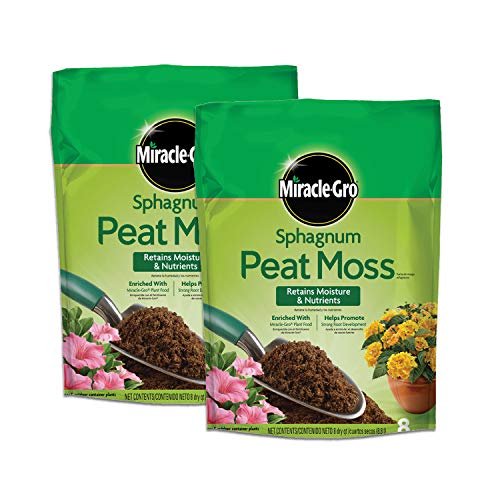
MOISTURE RETENTION: Miracle-Gro Sphagnum Peat Moss for plants retains moisture and nutrients, and helps promote strong root development

Fine 1–3mm For Seed Starting: Fine vermiculite blends easily into seed starting mix and seed starting soil, helping maintain consistent moisture around seeds and delicate roots for germination, seedlings, propagation, and early plant growth
Why Sand Is the Better Choice for Cacti and Succulents
Sand is the better choice for cacti and succulents because its fast drainage and sharp particles mimic their natural dry, gritty environment. Its coarse grains create large pore spaces, allowing excess water to drain quickly and preventing water from pooling around roots. This promotes better aeration, reducing the risk of low-oxygen conditions that can lead to rot. The angular particles resist compaction, keeping the soil loose and preventing it from becoming muddy or waterlogged. Using sand in your mix means you can water less often, as roots dry out faster between waterings. Be sure to use horticultural or builder’s sand, as fine play sand can compact and hold moisture like cement. Combining roughly one part sand with other gritty ingredients results in a chunky, crumbly soil texture that these plants prefer. To achieve a truly effective mix, consider also using a sharp bypass pruner to cleanly cut back any damaged roots before repotting. For added safety, you can also sterilize perlite with heat before mixing it into your soil to eliminate any potential pathogens.
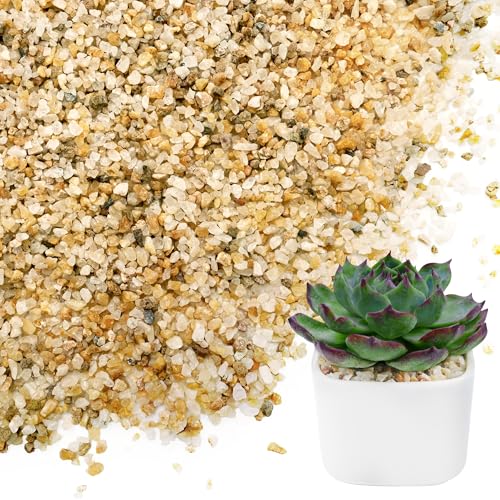
Natural & Reusable Coarse Sand: Our river sand in 1-2mm sizes, made of durable natural silica with no dyes or artificial additives. Washes clean without fading, perfect for long-term use in potting, crafts, and decor.

Pure Natural Silica Sand: A durable, nature-sourced base material that retains its appearance. Its color richly deepens when wet yet rinses clean without fading. Made from pure natural silica with no dyes, it's the reusable base for potting plants, aquarium setups, landscaping, and creative projects

【Different sizes and weights】: You can get a polished natural gravel weighing about 5 pounds, 2-4mm. These small pebbles are all natural pebbles. We do not wax it, there are no other substances, it is safe natural gravel, and you can use polished gravel with confidence
Why Perlite Dominates for Houseplants and Container Gardens
Perlite is the top choice for houseplant and container garden mixes because its porous structure creates essential air pockets that roots need for oxygen. This lightweight mineral prevents soil compaction, ensuring your mix stays loose and well-draining. It facilitates drainage and helps prevent root rot caused by soggy soil. Perlite also balances moisture retention and airflow, making watering more predictable and reducing the risk of overwatering. Additionally, it helps hold onto vital nutrients while allowing excess water to escape, providing a consistent feeding environment for your plants. For those seeking an alternative soil amendment, coco coir for seed starting offers excellent moisture retention and aeration properties similar to perlite. For very fine seeds, vermiculite for seed starting is often preferred for its superior moisture-holding ability. A common recommendation is to incorporate at least 20% perlite into your container mix for reliable performance. For moisture-sensitive plants, ratios can go up to 50% or even 1:1 with potting mix. Because it is sterile and has a neutral pH, perlite simplifies moving pots and keeps roots healthy. Its lightweight nature makes handling easier, and its structural properties support healthy root development over time. Using sharp tin snips to cut perlite bags prevents messy spills and wasted material.

✅ BEST GROWING MEDIUM for Plants Grown in Containers — Mix With Potting Mix For Best Results
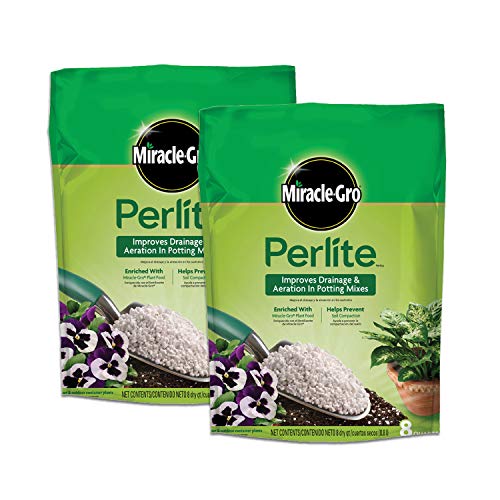
DRAINAGE AND AERATION: Miracle-Gro Perlite for plants improves drainage and aeration in potting mixes, and helps prevent soil compaction

Includes 10lb block of Back to the Roots compressed Coconut Coir that expands to 51qt of potting soil. A balanced pH, which means it’s truly all-purpose. Use alone or as an amendment for anything in a pot or in the ground — vegetables, flowers, herbs, and even starting seeds.
The Weight Problem: Lighter or More Stable for Your Pots?
Perlite’s lightness can be both an advantage and a disadvantage, depending on your needs. Its featherlight nature significantly reduces the weight of containers, making large pots and hanging baskets much easier to move. This is especially helpful indoors or when frequent repositioning is necessary. However, the same lightness means your pots lack stability, which can be problematic for tall or top-heavy plants. In outdoor environments exposed to wind, this increases the risk of tipping over.
Adding sand provides much-needed heft, anchoring pots more securely. This makes your containers less likely to topple in windy conditions. The trade-off is that sand makes handling more cumbersome due to its weight. Unlike perlite, sand does not retain nutrients or help adjust pH, so it’s best used as a stability enhancement rather than a soil amendment. Perlite can hold some nutrients because of its porous structure and does not significantly alter pH levels.
If ease of movement is your priority, particularly indoors or with mobile plant setups, perlite’s lightweight qualities are advantageous. Conversely, for outdoor plants in windy areas, the added stability from sand is essential to prevent accidents. Consider your environment and how often you’ll need to move your pots when choosing between these options.
How to Combine Perlite and Sand for a Custom Mix
Combining perlite and sand creates a well-draining, aerated mix that balances lightness with stability, tailored to your plants’ needs. Use a ratio of 1 part perlite to 2 parts coarse sand, mixed into a base of 3 parts potting soil. Measure all ingredients by volume to ensure consistency, and combine them in a large bin until evenly distributed. To minimize dust, pre-moisten the perlite before mixing. Both perlite and coarse sand are neutral in pH, so they won’t affect your soil’s acidity or alkalinity. For improved organic matter content, incorporate peat moss or compost into your base soil before adding the perlite and sand. Always choose coarse, washed silica sand—avoid fine beach sand that tends to compact—especially for succulents or cacti. Before producing a large batch, run a small test mix to observe drainage and settling behavior, making adjustments as needed.
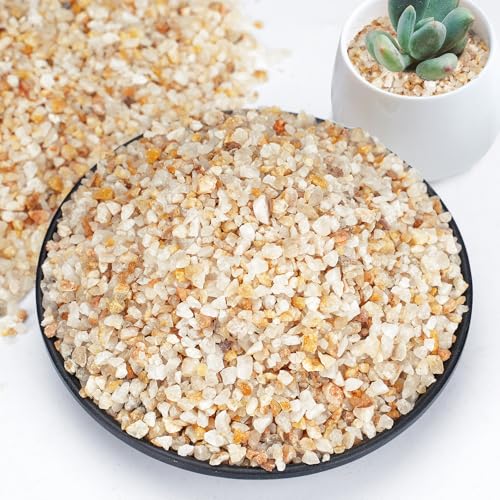
【Natural & Reusable Coarse Sand】The average size of these coarse sand is approximately 1-2mm, with naturally varied shapes that add unique beauty to your plants and bring natural diversity to your garden.

Perfect Drainage: Mix with potting soil to aerate the soil, the silica grit is great for increasing the draining properties of compacted soil. It also help lock in water and other nutrients in the succulent soil and help stabilize the newly planted succulent pots.
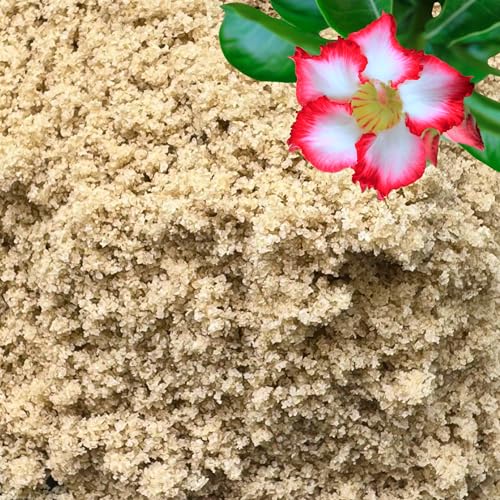
🌿 Transform Your Potting Mix – Plants Will Thank You Improve soil structure and drainage in seconds. This soft, fine-grain potting sand adds gentle aeration to indoor mixes, helping roots grow stronger, faster, and healthier in every pot.
Final Verdict: Perlite Improves Soil More for Most Gardeners
Perlite is generally a better long-term soil improver for most gardeners compared to sand. Its porous particles create stable air pockets, which prevent soil compaction and support healthy root growth. Sand tends to settle over time, which can worsen drainage and reduce aeration. Perlite also enhances nutrient retention by holding moisture without becoming waterlogged, ensuring your plants have consistent access to nutrients. While sand might be useful in specific situations, like cactus mixes, its benefits are limited to niche applications. For improving soil structure, pH stability, and overall tilth in containers or garden beds, perlite is the more versatile and effective choice.