Wondering how to give your seedlings a jumpstart? A seedling heat mat is a handy, waterproof pad that gently warms the soil from below, speeding up germination for many plants.
When paired with a thermostat, it helps you maintain the ideal temperature range for healthy sprouting.
Keep reading to see which seeds really benefit from this warm boost.
How Do Seedling Heat Mats Actually Work?
A seedling heat mat works by warming the soil from below, not the air around your plants. The mat’s bottom-heat mechanism raises the root-zone temperature by about 10 to 20°F above ambient conditions, emulating late-spring warmth. This consistent heat speeds up the metabolic processes that lead to germination, making it more reliable than fluctuating warmth. Because germination success hinges on precise root-zone conditions, using a PAR meter to measure light levels alongside your heat mat can help you avoid stressing young seedlings with insufficient or excessive light. For accurate root-zone assessments, consider using a best pH meter to monitor soil conditions as well. To prevent pathogens from harming delicate roots, you can combine heat mat use with sterilizing perlite in a microwave for five minutes before adding it to your seed-starting mix.
Heat transfer happens as the mat sits underneath your seed trays, pushing warmth upward through the growing medium. To operate safely, place the mat on a flat, non-flammable surface and ensure there is some space between the mat and the tray to prevent overheating. For precise control, pair the mat with a thermostat that maintains the root zone between 70 and 85°F. Consistent temperature regulation prevents stress on seedlings and optimizes germination speed. Keep an eye on soil moisture too, since warmer media tends to dry out faster.

✓ Consistent & Uniform Heating: BN-LINK seedling heat mat for seed starting maintains temperatures around 70–85℉, creating ideal conditions for seed starter and cutting propagation, speeding up seed germination and accelerating seedlings growth. The advanced heating film with double insulation layers ensures even heat and prevents scorching roots.

✓ EFFORTLESS SET UP: Easily program your desired temperature or switch between Fahrenheit and Celsius using just 3 buttons on this temperature controller. Please note: The BN-LINK reptile thermostat controller is intended for heating devices only, such as reptile heating pads, seedling heat mats, and heat lamps.

Professional, Reliable Results: Regulates and maintains your preferred temperature within a control range from 40-108 ℉ (Temperature display range is 32 -210°F); Perfect for professional horticulturalists or the budding grower; Comes with a sensor probe so you can reliably track the temperature of your plant’s roots
Which Seeds Need a Seedling Heat Mat?
Seeds that need a seedling heat mat are primarily warm-season crops and tender annual flowers. These seeds require soil temperatures above 70°F to germinate reliably. Vegetables like tomatoes, peppers, eggplant, basil, and okra benefit from bottom heat because their germination rates improve with consistent warmth. Tender flowers such as petunias also need stable warmth at the soil level to sprout effectively. Using a heat mat for these plants encourages vigorous early growth and reduces the risk of damping-off disease caused by overly moist, cool soil. This approach mimics the benefits of coco coir’s moisture retention for maintaining optimal growing conditions. For best results, pre-soaking the growing medium helps ensure even moisture distribution before placing seeds. Using a heat mat also requires monitoring humidity levels to prevent the seed-starting mix from drying out too quickly.
In contrast, cool-season crops such as lettuce, spinach, and broccoli typically do not need additional heat. They can germinate well in soil temperatures of 50–60°F, and applying extra heat may actually hinder their growth. Focus the use of a seedling heat mat on warmth-loving seeds that struggle to sprout in cooler indoor environments. This targeted approach helps ensure successful germination and strong seedling development in the early stages.
How Much Faster Do Seeds Germinate With Heat Mats?
Using a seedling heat mat can cut germination time by up to half for warm-season crops. For instance, tomatoes that normally take two weeks to sprout may emerge in just 5 to 10 days. Peppers and eggplant can also sprout 7 to 14 days faster with bottom heat. The mat increases soil temperature by about 10 to 15°F, elevating it into the optimal 65 to 85°F range for germination. This warmth speeds up metabolic processes, allowing seeds to absorb moisture more efficiently. For optimal results, pair your mat with a thermostat to maintain consistent temperatures, similar to how top fans for grow tents regulate airflow for stable plant environments. The biggest benefits are seen when your growing environment is cooler. Consistent bottom heat ensures even sprouting, regardless of room temperature, and can make a significant difference on slower days. Keep in mind that using a heat mat doesn’t affect the final size of your plants but helps you get them started sooner. Depending on the crop and initial conditions, germination can be expedited by several days up to over a week. For succulents, which often require well-draining soil to prevent root rot, a heat mat can also accelerate seed germination when combined with proper perlite amendments.

Professional Thermal Pad Materials: Made of durable PVC and PET film designed to meet MET standards; Far-infrared heating technology facilitates better resistance to high pressure; The IP67-rated waterproof surface is safe to scrub and helps keep the device clean and functioning properly

RELIABLE RESULTS: MET safety certified;Comply with UL 499;CSA C22.2 No.64; The Seedfactor MET safety certified professional heat mat maintains sweet-spot temperatures around 68-86℉(20-30℃), which is perfect for start seeding and cutting propagation; Made of high-quality PVC material, it is wear-resistant and durable to use

Size in 10" x 20.75" , these seedling heat mats are perfect for use with 1020 plant trays and keep the temperature of the root area within the optimal temperature range of 68-86℉. This combo includes 6 pack 10" x 20.75" & digital thermostat controller.
When Should You Turn Off the Heat Mat After Sprouting?
Turn off the heat mat as soon as about 50% of your seeds have sprouted. Once this threshold is reached, removing the bottom heat prevents harm to your seedlings’ development. Continuing heat after germination can cause seedlings to grow tall and weak, increasing the risk of damping-off disease. Most crops only require bottom warmth during germination, so promptly removing it helps promote healthy, sturdy growth. For warm-season crops, this typically means taking off the heat within a couple of days after sprouting. Cool-season crops like lettuce and broccoli generally need even less time, as lingering heat can trigger early flowering or bolting. Removing the heat also slows soil drying, making moisture control easier. After turning off the mat, move your trays under bright grow lights and allow the soil to cool to room temperature. Proper timing ensures strong seedlings, easier maintenance, and allows you to reuse your heat mat safely for future batches without risking damage to early sprouters.

Reliable Results: The VIVOSUN professional heat mat maintains optimal temperatures around 68-86℉ (20-30℃), perfect for Seedling start and cutting propagation; Made from durable PVC material, it's designed to last
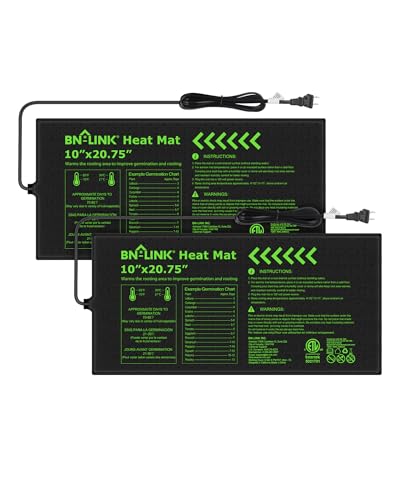
IDEAL GERMINATION TEMPERATURE: The BN-LINK seedling heat mats for seed starting helps maintain temperatures around 70°F to 85°F, the optimal range for seed germination, cutting propagation, and healthy seedling growth. Achieve faster germination and higher growth rates with seed heating mat.

IDEAL GERMINATION TEMPERATURE: The BN-LINK seedling heat mats for seed starting helps maintain temperatures around 70°F to 85°F, the optimal range for seed germination, cutting propagation, and healthy seedling growth. Achieve faster germination and higher growth rates with seed heating mat.
What Safety Risks Do Heat Mats Pose?
Fire hazards are a major safety concern with heat mats. Leaving the mat unattended while plugged in increases the risk of overheating, especially if the thermostat fails or malfunctions. Always turn off and unplug the mat when not in use or if you’re leaving the area. Place the heat mat on non-flammable surfaces such as concrete or stone, and keep it away from flammable materials like wood or curtains. Folding or puncturing the mat can damage the internal wiring or heating elements, creating a significant fire risk. Regularly inspect the mat for signs of damage, wear, or exposed wires, and replace it if necessary. Without proper temperature regulation, the mat can raise soil temperature by 10 to 20 degrees Fahrenheit, which can scorch roots or promote disease. Always use a thermostat to control heat output and avoid extension cords, especially in damp or wet environments. When in doubt about the safety of your heat mat, unplug it immediately to prevent potential hazards.