Are you wondering if the insulation you’re dealing with contains asbestos? Many older building materials, including vermiculite, can be contaminated, especially if installed before 1990.
While vermiculite itself isn’t asbestos, it’s often related to it, making identification tricky. Keep reading to learn how to handle potentially hazardous insulation safely.
What Is Vermiculite (and How Does Asbestos Get In)?
Vermiculite itself is not asbestos, but contamination with asbestos minerals is a common issue in certain deposits. During mining and processing, asbestos fibers can naturally occur in the same rock formations as vermiculite. When you crush and process the ore, these asbestos fibers can become mixed into the final product, creating a hidden hazard. Since this contamination is invisible, you cannot rely on appearance to determine safety. The safety of your vermiculite depends on its source; some deposits, like the infamous Libby mine, are known for higher asbestos contamination. If you are unsure about the origin of your vermiculite, it should be treated as potentially dangerous until you can confirm its safety through testing. To accurately identify such hazards, you would need specialized equipment like accurate pH meters to test water purity, though asbestos testing requires laboratory analysis. For growing succulents, many gardeners prefer using perlite for succulents as a safer alternative to vermiculite due to its similar drainage benefits without the asbestos risk. For houseplant care, some growers recommend coco coir as a substrate instead of vermiculite for its consistent texture and reliable performance.

HORTICULTURAL PREMIUM GRADE VERMICULITE SEEDS PLANTS NURSERY
Why Old Attic Insulation Is the Biggest Asbestos Risk
Old attic insulation is the biggest asbestos risk because it’s often disturbed without proper precautions. People may unknowingly release hazardous fibers just by walking through the attic or moving stored boxes. The key danger is disturbance—contact or movement can send asbestos fibers airborne, increasing inhalation risk. Inhaled asbestos can cause serious health issues like asbestosis, lung cancer, and mesothelioma, and there is no completely safe level of exposure. Renovation or maintenance activities, such as cleaning or remodeling, create the highest concentrations of airborne fibers. Even repeated trips into the attic add to your risk. Without professional assessment, you cannot assume the insulation is safe. If your home was built before 1990, treat any attic insulation as contaminated until a qualified expert confirms otherwise. Always follow a guide to properly cleaning tools and surfaces to avoid spreading fibers further. Limiting attic access remains your simplest and most effective precaution. Tools like best humidity packs for cannabis help maintain proper moisture levels, preventing mold that could disturb asbestos fibers during cleanup.
How to Test Your Vermiculite for Asbestos
To test your vermiculite for asbestos, start with the assumption that it is contaminated until a qualified laboratory confirms it is safe. Since over 70% of vermiculite sold in the U.S. between 1919 and 1990 came from the Libby mine, which contained asbestos, caution is essential. Do not disturb the material before sampling; shut down any HVAC systems and lightly wet the insulation to prevent dust from becoming airborne. Use proper sampling techniques by collecting from multiple spots, including lower layers, which are more likely to contain asbestos fibers. Seal each sample in a labeled, airtight container to prevent cross-contamination. As an alternative growing medium, clay pebbles are fired at high temperatures and are naturally free of asbestos, unlike suspect vermiculite. The key safety tip is to avoid any disturbance of vermiculite that may be contaminated.
Choose a laboratory that is accredited and experienced in testing vermiculite for asbestos. The laboratory will typically use polarized light microscopy (PLM) as an initial screening method. If the results indicate less than 1% asbestos, it is recommended to have the sample confirmed with transmission electron microscopy (TEM), which offers more precise detection. When you receive the analysis report, review the methods used and the asbestos percentage to understand the level of risk involved.
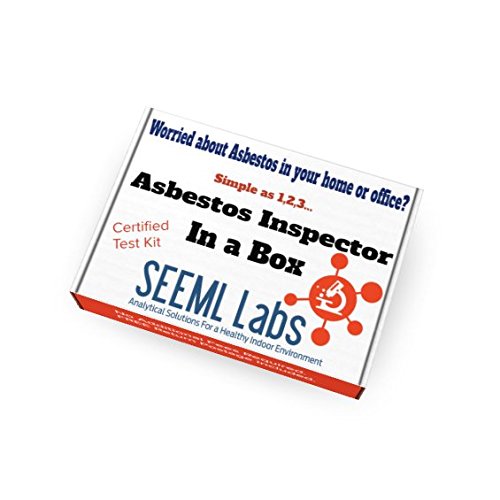
DIY Asbestos Sample Test Kit


SLGi Home Test Kits includes sampling tools, a prepaid return shipping label, instructions, and analysis.
Asbestos Risks Specific to Vermiculite Insulation
Disturbing vermiculite insulation releases airborne asbestos fibers, posing serious health risks. The danger increases significantly when you undertake renovation, demolition, or even minor maintenance that agitates the material. Asbestos fibers, once airborne, can be inhaled and cause lung cancer, mesothelioma, and asbestosis. Even low-level, repeated exposure over time can lead to serious health problems. Since the vermiculite was sourced from the Libby, Montana mine, which contaminated its ore with toxic amphibole asbestos between 1923 and 1990, it is unsafe to assume all vermiculite is asbestos-free. The Environmental Protection Agency recommends treating all vermiculite insulation as containing asbestos unless tested and proven otherwise. This contamination isn’t limited to your attic; it can also affect the surrounding environment, requiring careful cleanup procedures. Your level of risk depends entirely on how much you disturb the material. For those seeking a simpler alternative, using peat pellets provides a clean, pre-soaked medium for starting seeds without asbestos concerns. For those handling other growing materials, effective heat sterilization techniques can help ensure safety and reduce contamination risks. For maintaining healthy indoor plants like a fiddle leaf fig, consider using top LED grow lights instead of disturbing contaminated insulation.

Suitable Materials: Popcorn ceilings, siding, insulation, drywall texture, floor tiles.

3 Business Days turnaround on Samples (72Hr) - All samples tested and results confidential sent via email within 24hrs of receipt of the sample

🏷️Certified NVLAP Lab Results in 72 Hours – Includes prepaid return label, expert lab analysis, and a professional digital report so you get accurate asbestos detection fast. Perfect for homeowners, real estate inspections, and safety checks.
What to Do With Vermiculite Insulation (Safe Handling Steps)
If your vermiculite insulation is intact and undisturbed, you should leave it in place. This is the safest and simplest option. Do not touch, move, or vacuum the material. Limit your time near the insulation and restrict access to the area. Seal any cracks, caulk around fixtures, and use weather stripping to contain any sifting or dust. Posting warning signs can also help warn others to avoid disturbing the insulation.
If you need to access the area, walk carefully on boards to distribute your weight, move slowly, and avoid stepping directly on the insulation. Be cautious to prevent tracking dust into your living spaces.
When removal is unavoidable, do not attempt a DIY approach. Hire a trained asbestos contractor for proper disposal. Follow all safety procedures: wet the material thoroughly to minimize dust, double-bag it, and seal containers according to local waste disposal regulations. Only take samples or test suspected vermiculite after consulting a qualified professional. For insulation that remains intact, leaving it undisturbed is generally the safest approach.