If you’ve ever wondered how perlite expands so dramatically during processing, you’re not alone.
This lightweight, porous material starts as volcanic glass that traps water inside, which transforms into steam when heated quickly.
The entire process turns raw volcanic rock into the insulating, growing media you see in many gardens and construction projects.
The full process involves carefully controlled heating and grading to produce different grades for specific uses.
Where Perlite Ore Comes From: Volcanic Origins and Mining
Because perlite ore starts as a volcanic glass, you’re looking at the product of rapid lava cooling that traps water inside the rock. These volcanic formations are typically found in rhyolitic terranes, where high-silica lava flows and domes dominate. The best ore deposits form in specific geological settings: young, glassy flow tops and welded tuffs, where hydration turns the volcanic glass into a commercial-grade material. Over time, older deposits undergo devitrification, which ruins their quality, so they aren’t suitable for harvesting. When processed into a horticultural grade, it becomes the best perlite for succulents due to its excellent drainage and aeration properties. To ensure healthy plant growth, gardeners often recommend pairing this material with sharp, clean pruning shears to maintain proper hydration and structure in the garden. For Monstera care, this perlite can also be blended with coco coir to improve moisture retention without sacrificing drainage.
You should focus on near-surface, water-rich zones within recent volcanic rock, especially in regions like the western United States, Greece, or Turkey. These deposits tend to be thick and shallow, making extraction more cost-effective. Their accessibility and water content make them ideal for processing into the perlite product used across various industries.
How Miners Blast and Dig Perlite Out of the Ground
To extract perlite from the ground, surface mining is the most common approach. Open-pit mining is preferred because the ore is usually close to the surface. You start by removing the overburden using bulldozers, which also helps preserve the topsoil for later reclamation—this reduces the environmental footprint. If the ore is soft, ripping it with a bulldozer-mounted ripper is an effective and cheaper alternative to blasting. For harder zones, you drill holes and blast the rock just enough to fragment it without grinding it into dust. Safe blasting involves controlled designs to prevent fly rock and dust from spreading. After breaking the ore, you load it using front-end loaders or excavators and transport it with trucks or conveyors to the processing plant. Often, the broken ore is stockpiled nearby, keeping it ready for processing when needed. For optimal orchid growth, these raw perlite particles are later expanded and used in potting mixes alongside full spectrum LED grow lights. Testing the moisture content of the final perlite product with a moisture meter ensures optimal quality for plant care applications. However, using any lamp for a grow light bulb is not recommended because standard lamps lack the proper electrical ratings and ventilation for high-intensity horticultural bulbs.
Getting Perlite Ready for the Furnace: Crushing, Drying, and Screening
You screen the dried ore using vibrating decks to separate it into different sizes. The top screen has a ¾ inch opening, while the second screen is ¼ inch. These screens help you sort the material efficiently and identify oversized pieces. Material that remains on the top screen gets recycled back for further crushing, ensuring uniformity in size. For precise cutting tasks during plant care, pruning shears for bonsai are often compared for their sharpness and ergonomic design. Proper sterilization is also essential for ensuring the horticultural perlite remains free from pathogens after processing. The final screened product is then fed into a furnace, where it is heated to over 1600°F to expand into lightweight perlite for horticultural use. Once the process is complete, you end up with clean, dry, and correctly sized feed ready for the furnace.

Coarse Perlite for Growing Media: Large-grade horticultural perlite designed for potting soil, seed starting, plant propagation, organic gardening, and custom soil mixes for indoor or outdoor use.

100% NATURAL PRODUCT - Perlite is a naturally occurring, volcanic rock. When furnaced at high temperatures, Perlite "pops" and expands 7 to 15 times its original volume. The resulting lightweight particles are made up of microscopic spheres with a porous, broken surface that promotes plant growth. This allows aeration and drainage of the root system and provides holding capacity for water and nutrients.
100% NATURAL PRODUCT - Perlite is a naturally occurring, volcanic rock. When furnaced at high temperatures, Perlite "pops" and expands 7 to 15 times its original volume. The resulting lightweight particles are made up of microscopic spheres with a porous, broken surface that promotes plant growth. This allows aeration and drainage of the root system and provides holding capacity for water and nutrients.
The Expansion Process: How Rapid Heating Transforms Perlite
Rapid heating transforms perlite by turning volcanic glass into a lightweight, porous foam. When raw perlite enters the expansion furnace, you apply intense heat quickly. This heats the rock above 850°C, causing the water trapped inside to vaporize into steam. As the internal pressure builds, it forces the softened particles to burst outward in a rapid expansion. This process creates a cellular structure with numerous pores, increasing the volume by up to 20 times. The resulting material is fluffy and highly porous, ideal for insulation and lightweight construction applications. To ensure proper expansion, you must maintain the temperature within a specific range—hot enough to soften the glass, but not so hot that it sinters or fuses together. Preheating raw ore helps reduce fines and promotes more uniform expansion. After the particles have expanded, cooling stabilizes the new porous structure, locking in its lightweight characteristics.

Fully EXPANDED, providing maximum aeration (oxygen to the roots)! – Soil , peat, and coco mulch hardens and compacts over time. This happens as the soil or media is watered; each particle gets closer to the others and air pores are shrunk or eliminated. When this happens, water will not drain through the grow media very well and air will not easily penetrate. Each Pahroc Giant perlite particle has a unique shape that won’t pack down, preventing soil compaction.

Fully EXPANDED, providing maximum aeration (oxygen to the roots)! – Soil , peat, and coco mulch hardens and compacts over time. This happens as the soil or media is watered; each particle gets closer to the others and air pores are shrunk or eliminated. When this happens, water will not drain through the grow media very well and air will not easily penetrate. Each Pahroc Giant perlite particle has a unique shape that won’t pack down, preventing soil compaction.
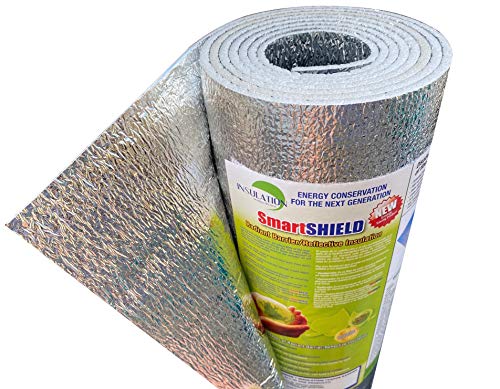
EXTREMELY EFFECTIVE - reflect 95% of radiant energy, perfect RADIANT BARRIER.
Grading and Using Expanded Perlite in Construction and Gardening
Expanded perlite is available in a range of particle sizes, typically graded from ultra fine to super coarse, which directly affects its application performance. Fine grades produce a smoother finish, ideal for plasters and coatings, while coarse grades are better suited for loose-fill insulation due to their larger particles. In gardening, fine perlite helps retain water for plants requiring moisture, whereas coarse grades promote better aeration for roots that need more oxygen. For construction, medium-sized grades strike a balance, providing both lightweight concrete strength and thermal insulation. Its natural, inert composition means expanded perlite will not decompose or pollute the environment, supporting sustainable practices. Reusing expanded perlite is straightforward—simply re-screen it to prepare for new uses. Unlike vermiculite, which is better for moisture-retentive plants, perlite is ideal for improving drainage and aeration in arid-loving species. When comparing grow media, zeolite excels in nutrient retention while perlite prioritizes drainage and airflow. Whether mixing green roof substrates or topping insulating plasters, choosing the right particle size ensures optimal performance while maintaining eco-friendly, closed-loop usability. For long-term storage, keep perlite in a dry, sealed container to prevent moisture absorption that can reduce its insulating properties.

🌿 Boost Root Health & Drainage Instantly – Extra Coarse Grade 4 perlite for plants improves drainage and soil aeration, prevents root rot, and creates air pockets ideal for succulents, orchids, and cacti.

CHUNKY PERLITE SIZE: Each piece measures 1-2CM, providing large air pockets that promote healthy root growth.
🌿 Boost Root Health & Drainage Instantly – Extra Coarse Grade 4 perlite for plants improves drainage and soil aeration, prevents root rot, and creates air pockets ideal for succulents, orchids, and cacti.