Not sure which hydroponic system is best for your setup? There are six main types, each suited to different goals and scales.
From simple, beginner-friendly options to high-tech methods that demand precision, choosing the right one can save you time and money.
Keep reading to find out which system fits your needs.
What Is a Hydroponic Wick System: and Is It Right for Beginners?
This method works best for small, low-demand crops like lettuce, herbs, or microgreens. You’ll need moisture-friendly media such as perlite or coco coir to hold the roots and facilitate capillary action. The main advantage is its simplicity: no mechanical parts, pumps, or timers are necessary, making it perfect for beginners who want a quiet, hassle-free start. However, keep in mind that capillary action cannot supply nutrients quickly enough for large, heavy-fruiting plants like tomatoes or peppers. Root oxygenation is also lower compared to other systems, so you’ll need to periodically flush out salt build-up to prevent root problems. Overall, this system is ideal if you’re starting small and want an easy, low-maintenance hydroponic setup—just know its limitations before committing to larger crops. To further optimize the environment for these small crops, lowering the VPD in grow tents can help maintain proper humidity levels. For accurate monitoring of your nutrient solution’s health, a reliable pH meter is essential to prevent imbalances that can stunt root growth in wick systems. For growers seeking to boost growth rates in these small setups, adding supplemental CO₂ for grow tents can significantly enhance plant yields.

DIY Vacation Self-watering System: Put the one end to a water source, this watering wick will transport water to the other end automatically, and drip within 15 minutes (the practical time depends on the length of the rope you cut off; make this watering rope completely soaked in water before use then it will drip instantly). Easy to make a DIY automatic watering device system, help you care your plants while you are away from home or when you go outside or on business

DIY Vacation Self-watering System: Put the one end to a water source, this watering wick will transport water to the other end automatically, and drip within 15 minutes (the practical time depends on the length of the rope you cut off; make this watering rope completely soaked in water before use then it will drip instantly). Easy to make a DIY automatic watering device system, help you care your plants while you are away from home or when you go outside or on business

Perfect for Beginners: This hydroponic system kit is ideal for those starting out as indoor vegetable growers or for children and teachers doing projects in class.
How Deep Water Culture Hydroponics Delivers Faster Growth
Because its roots are suspended directly in an oxygen-rich nutrient solution, Deep Water Culture (DWC) promotes faster growth by supercharging your plants’ metabolism. This constant root oxygenation speeds up respiration, allowing plants to convert energy into growth more efficiently. Roots also access water and minerals directly from the reservoir without soil buffering, resulting in immediate nutrient absorption and eliminating delays. The stable, aerated environment prevents anaerobic stress that could hinder development. Studies show that DWC lettuces reach 20.88 centimeters in height with a leaf area of 200.15 square centimeters in just 28.6 days—about 15 to 25 percent faster than passive hydroponic systems. Because your plants don’t waste energy searching for resources, they build biomass more quickly, making DWC particularly effective for leafy greens and herbs. For growers using a soil-based medium, adding perlite for succulents improves drainage and aeration similarly. However, unlike soil, coco coir contains negligible nutrients and requires pre-buffering with calcium and magnesium to avoid deficiencies. While perlite holds water via surface pores, LECA’s capillary action draws moisture upward from a reservoir, making it a better match for wick-based or ebb-and-flow setups where consistent wetting is needed without waterlogging.
Why the Nutrient Film Technique Is a Favorite Hydroponic Method
The Nutrient Film Technique (NFT) is popular because it provides an optimal oxygen and nutrient balance for plant roots. A thin, continuous flow of nutrient solution runs through channels, leaving the upper root mass exposed to air. This exposure maximizes oxygen access, which promotes healthier roots and faster plant growth. Additionally, the system recycles water efficiently, saving up to 90% compared to traditional farming methods. With a small volume of solution, you waste less fertilizer per cycle, and the constant flow allows nutrients to be reused, increasing overall system efficiency. Its modular, space-saving design fits well into tight urban environments. Since it uses little to no medium, inspecting and disinfecting roots is straightforward. This makes NFT especially suitable for cultivating fast-growing leafy greens. For best results, applying a bloom booster can further enhance flower production in this system. For those wanting to combine NFT with a controlled environment, reading reviews on complete grow tent kits can help select a setup that matches this method’s efficiency.

High Yield and Quality: Soilless cultivation with nutrient film can meet the production potential of crops; Compared with traditional soil cultivation, the yield can be doubled with requiring less water and less space,enjoy healthy vegetables at home.

High Yield and Quality: Soilless cultivation with nutrient film can meet the production potential of crops; Compared with traditional soil cultivation, the yield can be doubled with requiring less water and less space

High Yield and Quality: Soilless cultivation with nutrient film can meet the production potential of crops; Compared with traditional soil cultivation, the yield can be doubled with requiring less water and less space
How Ebb and Flow Hydroponics Balances Oxygen for Mixed Crops
The ebb and flow system balances oxygen through short flood cycles typically lasting 5 to 15 minutes every 3 to 5 hours. This timing ensures roots receive enough air exposure without over-saturating the medium. The cycle duration varies depending on the crop: fast-growing leafy greens like spinach need more frequent flooding, while heavier crops like peppers can tolerate longer intervals between floods.
During the drain phase, fresh air is pulled down through the growing medium, delivering essential oxygen directly to the roots. This rapid exchange prevents anaerobic conditions that can harm plant health. Controlling flood durations carefully is crucial—too long and roots can drown, too short and they may not get enough water. Regular cycling supports both hydration and gas exchange, making the system suitable for mixed crops with different oxygen needs.
The reusable reservoir distributes water, nutrients, and dissolved oxygen uniformly upward through the medium. This cyclic approach ensures roots regularly experience both wet and air-exposed conditions. Proper timing is key: excessive flooding can reduce air exchange, leading to root stress and potentially weak plant growth. For optimal root health, it is important to sterilize perlite effectively before use to prevent pathogens from disrupting the oxygen balance.
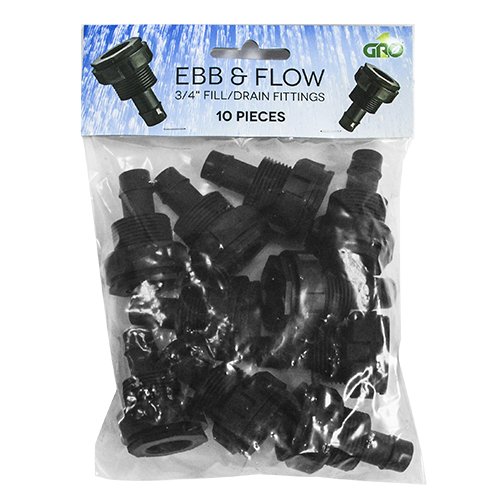
EBB AND FLOW FILL DRAIN – Ebb and Flow Drain Fittings, an essential part of your hydroponics supplies. Use as repair, replacement, or spare parts for your irrigation system.

Grow Flow Controller: Electric ebb and flow controller unit groups plants and keeps them evenly watered; controls up to 24 five-gallon or 48 two-gallon growing modules for scalable indoor gardening setups
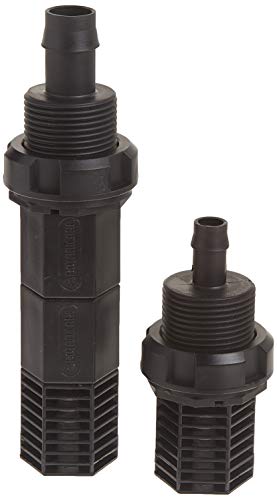
Use as ebb and flow fittings and bulkhead fittings
Why Drip Systems Scale Best for Hydroponic Fruiting Crops
Drip systems are the optimal choice for scaling up hydroponic fruiting crops like tomatoes and cucumbers because they offer precise control over nutrient delivery. Each plant receives water and nutrients directly at its root zone through adjustable emitters, allowing you to fine-tune flow rates and timing according to different growth stages. This targeted approach supports fruit development and sizing, resulting in higher yields.
As you expand your operation, adding more pots, lines, and emitters is straightforward without needing a complete redesign. The modular nature of drip systems makes them highly scalable, enabling you to grow from small setups to large commercial farms efficiently. Using media like perlite or coco coir provides supportive physical structure for heavy vine crops while allowing recirculation of nutrient solution.
Commercial growers prefer drip systems for crops such as tomatoes, peppers, and strawberries because they maintain stable root-zone moisture and consistency. This leads to more uniform fruit set and better marketable yields compared to ebb-and-flow or raft systems. Proper fertigation with drip systems keeps your fruiting crops productive at any scale, ensuring healthy growth and optimal fruit production.
Aeroponics: When to Use It-and When to Skip It in Hydroponics
Aeroponics is best suited for high-value, fast-turnover crops grown in controlled environments where you can monitor and manage every detail. It involves suspending roots in air and misting them intermittently, which significantly boosts root oxygenation and nutrient absorption. This approach can lead to faster growth rates compared to other hydroponic systems. It also uses approximately 10 to 15 percent less water than standard hydroponics, making it efficient in water-constrained settings. Its design fits well in vertical tower setups, ideal for optimizing limited urban space. Accurate measurement of light intensity in aeroponic systems is important, as using the wrong meter, like a lux meter instead of a PAR meter, could lead to improper lighting for plant growth. To prevent clogs, it is critical to clean the nozzles regularly as part of routine maintenance. Unlike other media such as clay pebbles, aeroponics relies solely on air and mist for root support.
However, you should avoid aeroponics if your operation values simplicity and low maintenance. The system requires diligent upkeep because nozzles clog easily and pump failures can stress or damage roots rapidly. Power outages without backup systems pose a serious risk of crop loss. Additionally, initial setup and ongoing operation are more costly, and the system offers less tolerance for nutrient inaccuracies, demanding precise control and monitoring.